


Remember these Midweek Musings from a little while ago, in which I watched the maintenance worker cleaning the poles at our Nanaimo-East Hastings intersection? That was the first time I ever noticed that these poles have different colors and setups. Some feature street lights only, some also hold the traffic lights, some carry all kinds of signs or posters, some act as everything poles. Smooth wooden stems reach into our gray-blue East Van winter skies, wrapped in overlapping, tangled loops and layers of aluminum, copper, wires, paper, tape, pins, and paint. Nobody designs the poles; they are pragmatically produced with a focus on function, not beauty. Within the cityscape, they are scribbled marginal notes. When it comes to public infrastructure, however, nothing would work without them.
The poles are such self-evident items structuring and supporting everyday life, almost invisibly, as unsung heroes. From the top, they carry high-voltage power lines, telephone and cable TV lines as well as fiber-optic internet cables in the middle, and all kinds of support wires holding it all together at the bottom. Below that is where the unwired, unplugged guerrilla connection of neighbors takes place. Local events. Lost cats. Fridge repair. Guitar lessons. Art shows. Dog walks. Witness search.
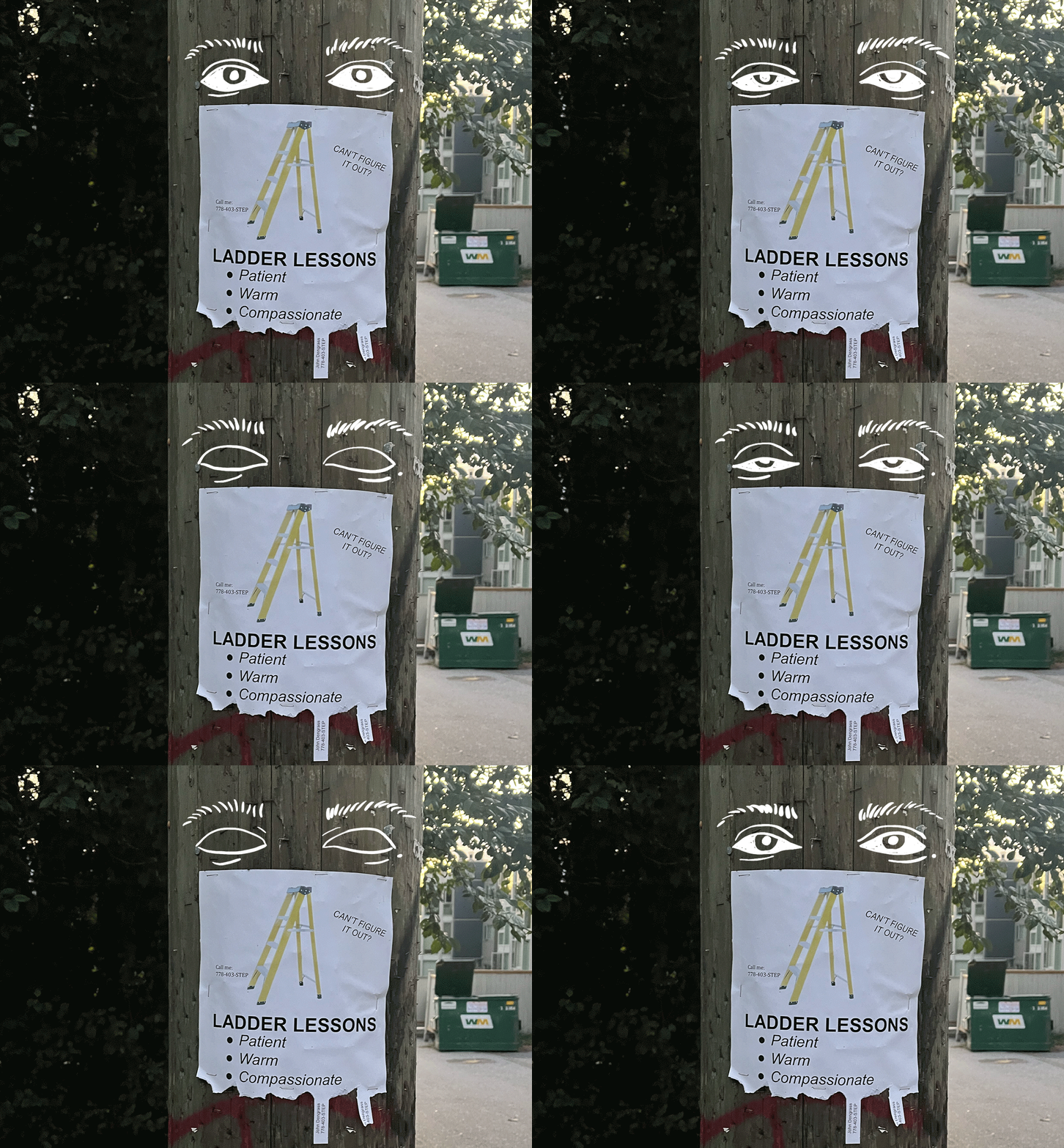
Image: Lana Chebib
So, by origin, officially, the poles on our street corners serve the purpose of long-distance communication between people who might never see each other in person. But in fact, at the same time, they also provide the base for immediate community communication between people who probably make eye contact with each other on the daily. They could even shake hands upon agreeing to a deal of five piano sessions, moving help on Saturday, or a bicycle sale for the new commute to work. Or they hug in relief of solving a problem together, returning a missing wallet, organizing a successful fundraising yard sale. Tactile touch. Tension. Electricity.
Differently charged parts move through a conductor, energy passes on, and results in light, heat, motion, and information processing. Creating a circuit in which mutual illumination, warmth, and ideas flow. It’s how power in a city flows. This metaphor of human dynamics as electric connection is simple and stale. I prefer thinking of what’s going on as a more complex, rather conflicting, bigger picture, in which the poles at our intersections are tall dead trees, yes, but as still and neutral as they are, we cannot help but equip them with evidence of our life force and adorn them with what’s important to us.
Image: Lana Chebib
There’s even more contrasts coming alive here: Sometimes, tacking a piece of paper to a pole seen by resident passersby is still more efficient than an online ad that users on the other side of the country don’t even notice on their scroll, much less look for. A quiet poster can do a job that a boisterous phone call could never accomplish. Yet, all these ways of communicating require the same wooden masts. The privately owned and operated cables are next to the plane, two-dimensional networks created and installed by the public itself. The possibilities of the poles are just too obvious. May genuine needs always win over imposed wants. Get your staplers! Make your own stickers! Invigorate your street corner!
What a beautiful ode to poles! Nature - trees, skies, oceans, flowers, mountains - they are easy subjects for romantics. They’ve been our most ardent muses since we’ve had poetry. But it’s a lot harder to romanticize modern city life - part of it is what you said! They are functional, utilitarian, not made for beauty or aesthetics. But that is also true of nature, isn’t it? We’ve evolved to find nature beautiful. And nature has evolved to be beautiful for us. Flowers are pretty for a reason. Same for puppies and kittens. How long till we find our cities beautiful? Will we be around for long enough? Will cities?